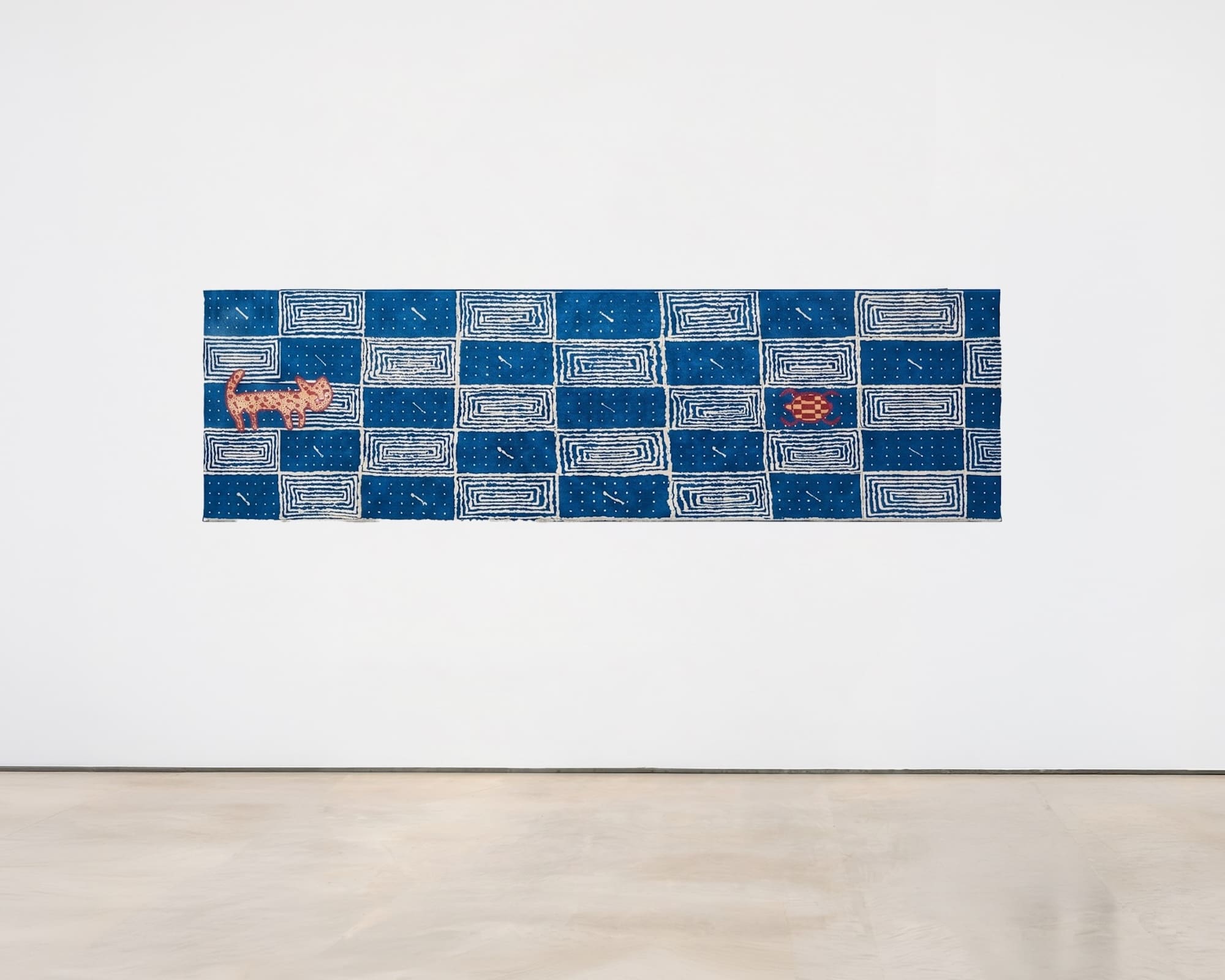
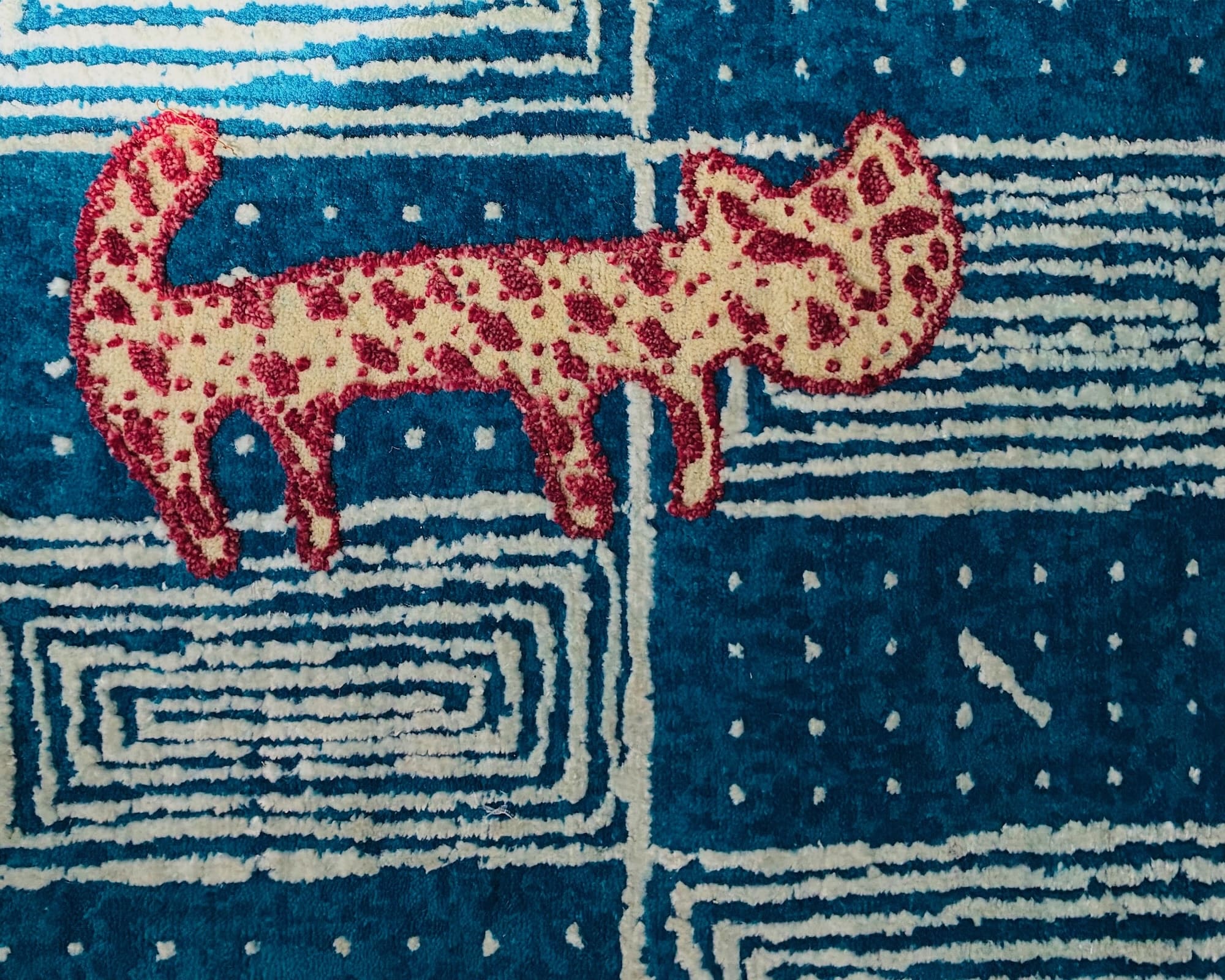
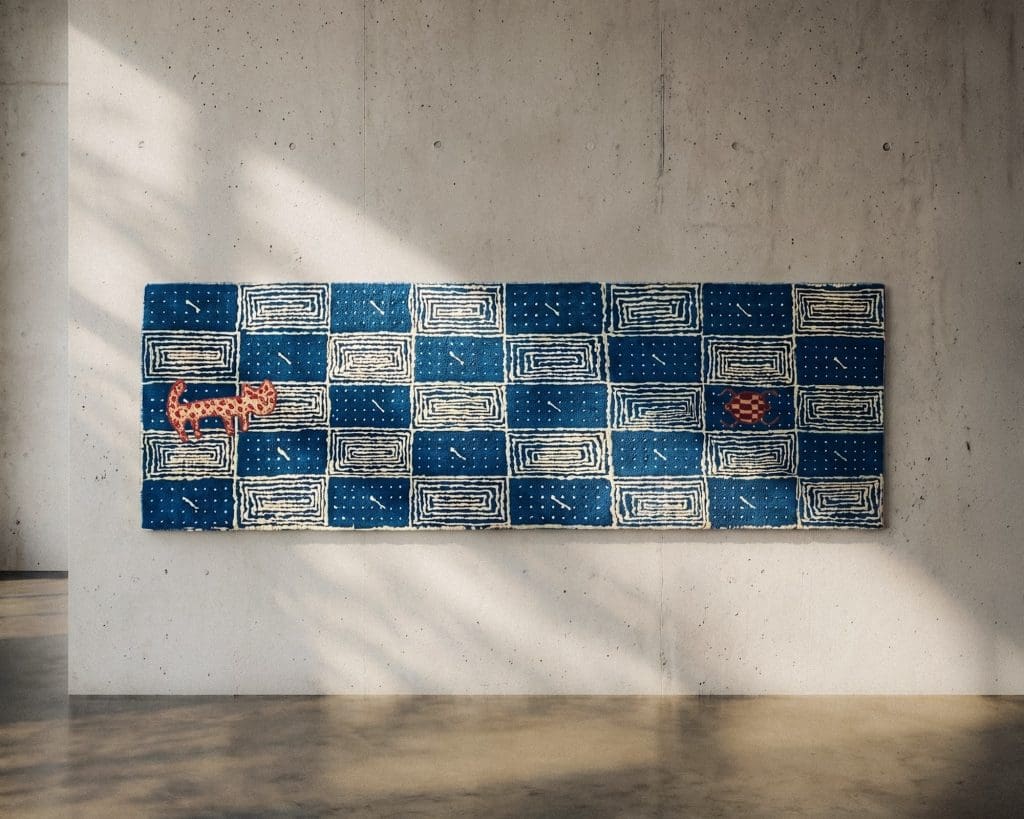
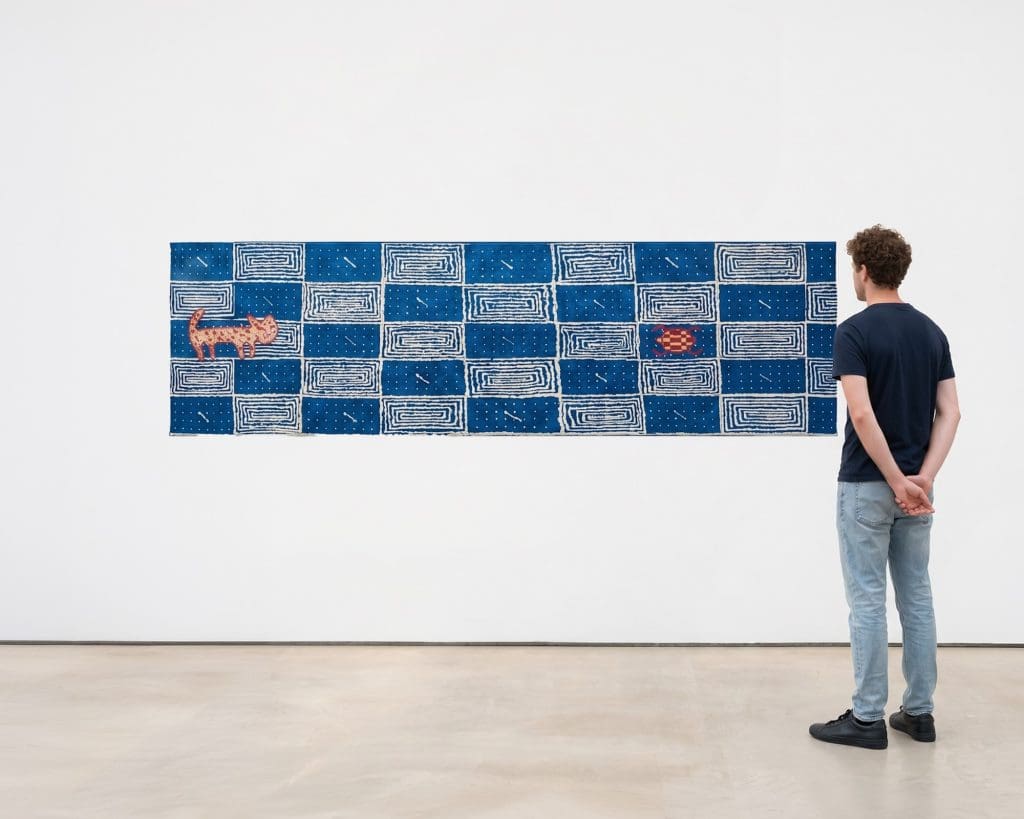
The Tortoise & The Leopard is a hand-knotted rug designed by Obinna Elechi as part of his Ukara Series. Inspired by the visual language of the traditional Ukara Cloth and an Igbo allegory retold in Chinua Achebe’s Anthills of the Savannah, the piece explores storytelling, cultural memory, and the transmission of knowledge through craft.
We spoke with Obinna to learn more about the origins of the project and the process of translating his work into a contemporary woven piece:
can you tell us about the origins of the ukara series and your collaboration with odabashian?
Obinna Elechi: The Ukara Series grew out of a belief that craft traditions are important vehicles for cultural transmission, but that many are at risk of disappearing as skills and practices are not always passed down through generations. Growing up in Nigeria, textiles such as Akwete and Batik were part of my everyday life through my mother, who was a clothing designer and tailor, but I only later came to understand the histories they carried.
When I decided to explore this heritage through my work, I began with the Ukara Cloth. I discovered Odabashian through the work of architect Little Wing Lee and reached out because I wanted to collaborate with a company that understood both craftsmanship and contemporary design. What began as a conversation with Jaime eventually became this project.
your work often explores memory, migration, and cultural hybridity. how does these themes influence this piece?
OE: I am Nigerian, specifically Igbo, and more recently American. I was born and raised in Nigeria, later lived in Holland, returned briefly to Nigeria, and eventually moved to the United States, so moving between cultures has always shaped my perspective. The Ukara Series is rooted in a tradition belonging to the Efik, Ibibio, Igbo, Uguakima and Abe peoples of southeast Nigeria and southwestern Cameroon, where cloth becomes a vessel for stories, symbols, status, and ritual meaning.
My intention was not to impose hybridity onto the work, but to honor this existing visual language through a different medium, navigating between my experience as a contemporary designer and my relationship to a tradition that is part of my heritage.
what drew you to the story of the tortoise and the leopard?
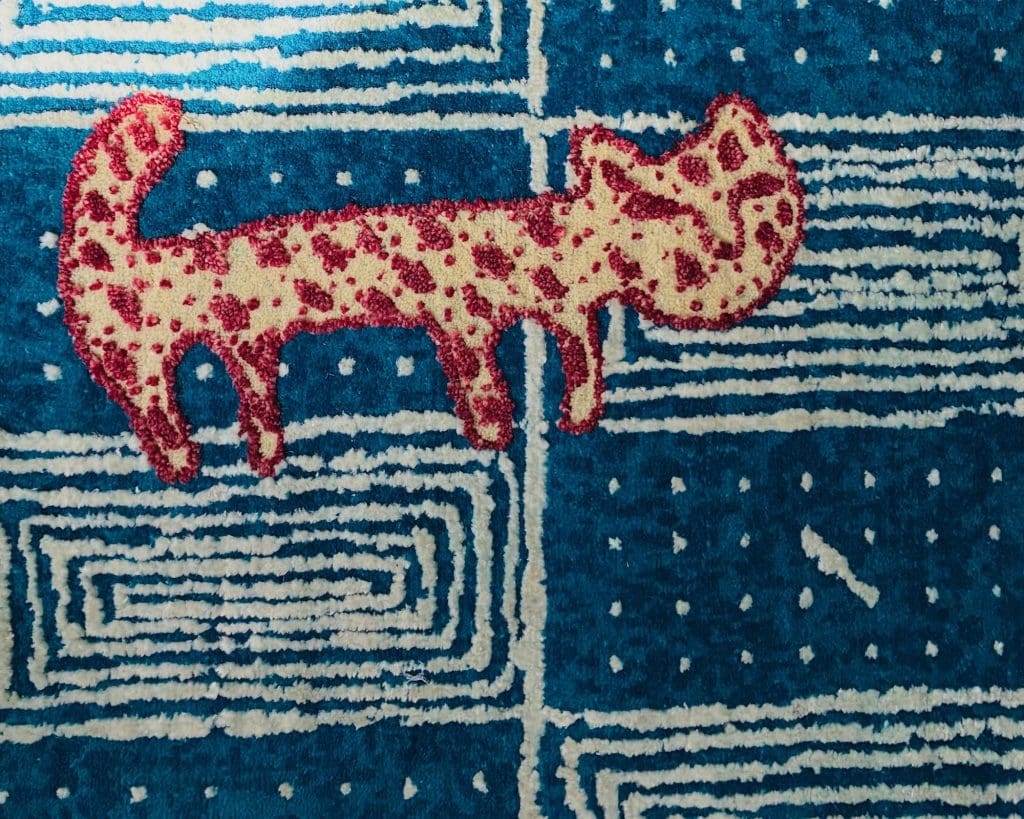
OE: The story, retold by China Achebe in Anthills of the Savannah, features two iconic figures in Igbo folklore: the tortoise, a cunning and wise character, and the leopard, a symbol of power and strength. When the tortoise is cornered by the leopard, it spends its final moments scratching the earth so that others will know a struggle took place.
I was struck by both the humor and the dignity of that gesture. The idea of leaving a mark and making oneself visible to the future felt universal and became the right narrative to build the piece around.
how did you translate the ukara cloth and this narrative into a woven object?
OE: The Ukara Cloth is already a document that carries knowledge, identity, and stories, so this was less a translation and more a continuation of what the cloth has always done. I worked with its visual grammar: the repeating grid, the indigo and white palette, and the relationship between figures and background, allowing the tortoise and the leopard to interrupt the structure.
Working with rugs also introduced the possibility of bringing these stories into everyday spaces. Much like speaking a language keeps it alive, living with objects that carry cultural narratives allows those stories to continue in contemporary life.
how was the process of collaboration with odabashian?
OE: It was a very collaborative and conversational process. The Odabashian team brought technical expertise and a genuine appreciation for the history behind the Ukara Cloth and the possibilities of the project.
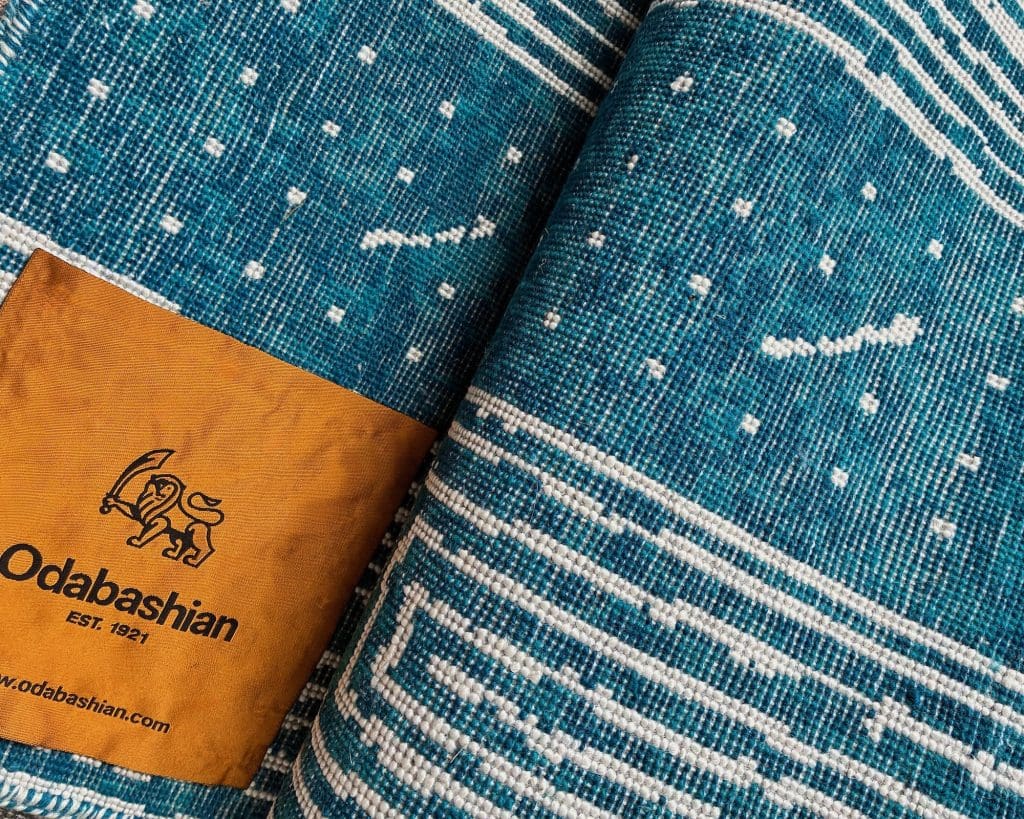
One of the most interesting moments was seeing the rug take shape during the weaving process. The subtle variations in the blue tones brought a texture and depth that I enjoyed, and the final piece came very close to the original design.
Early conversations with Jaime also centered around the idea that rugs can outlast a person and be passed down through generations. That idea was especially meaningful because it connects the object itself to the broader themes of memory, storytelling, and continuity.
what aspects of the final piece are you happiest with?
OE: I am happiest with how closely the final rug reflects the original design and with the quality of its craftsmanship. The durability of the piece is important because I believe the narrative can live on through it.
I also enjoy the idea that someone can experience it as a object within their home while also knowing that they are living with a story from the Igbo tradition.
obinna elechi

Obinna Elechi is a Nigerian-born artist and designer living and working in New York. His multidisciplinary practice spans art, architecture, interiors, and furniture exploring themes of storytelling, cultural memory, identity, and diaspora through mythology, symbolism, and contemporary perspectives. Originally from Port Harcourt, Nigeria, he grew up in Holland and later moved to the United States, where he studied architecture at Virginia Tech and Parsons School of Design.