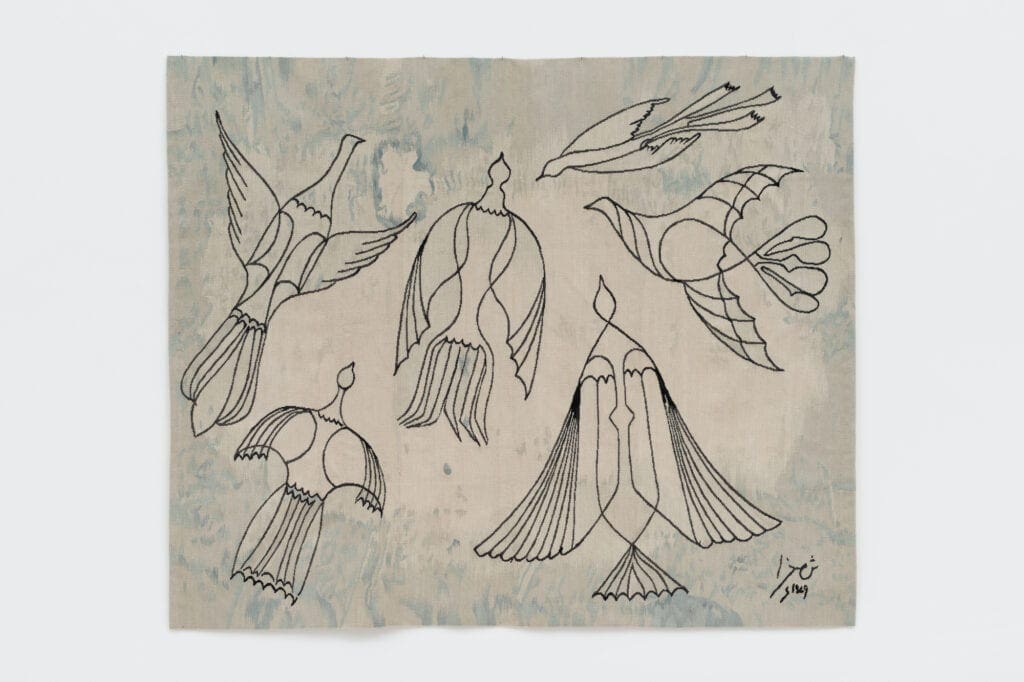
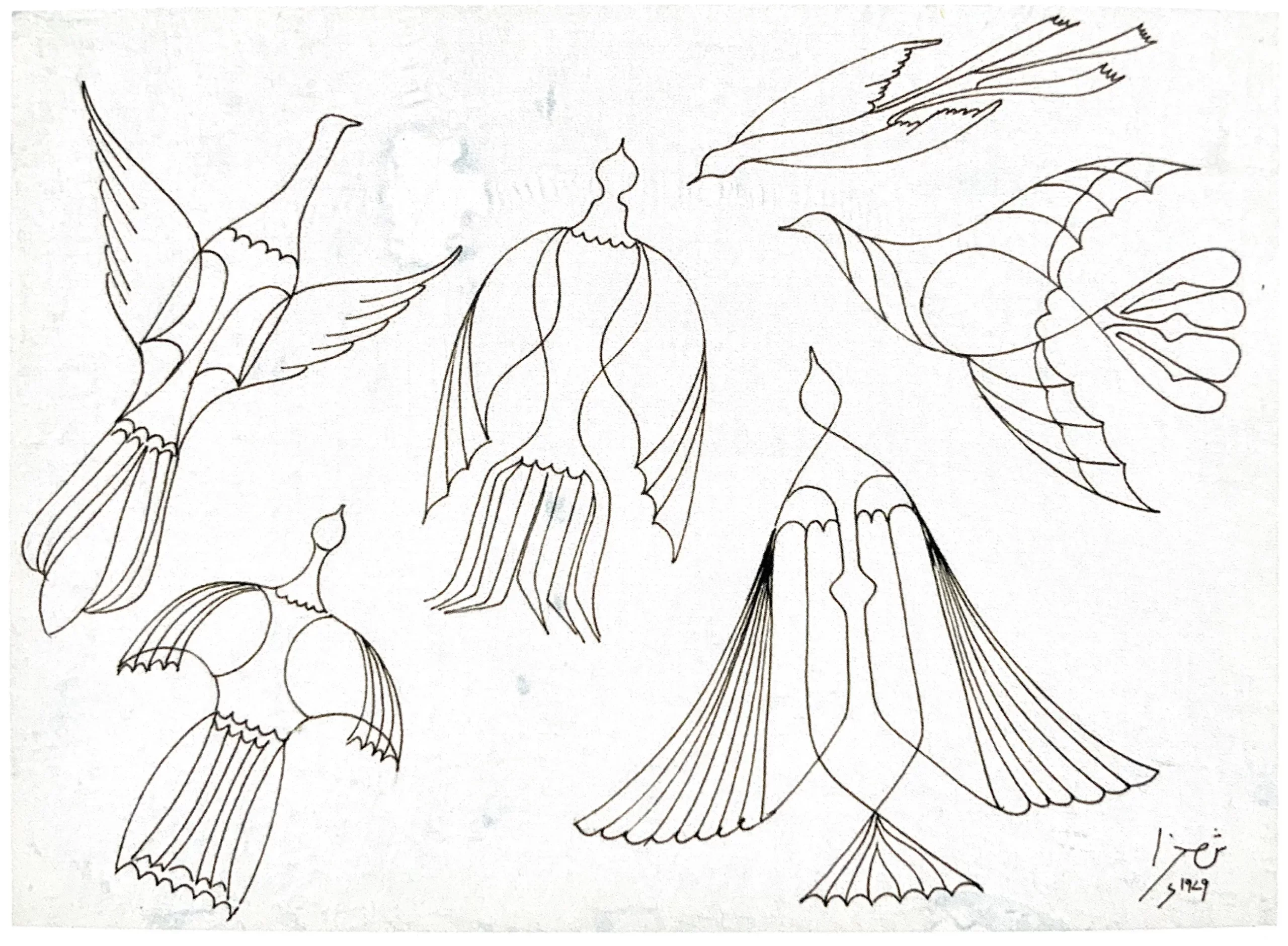
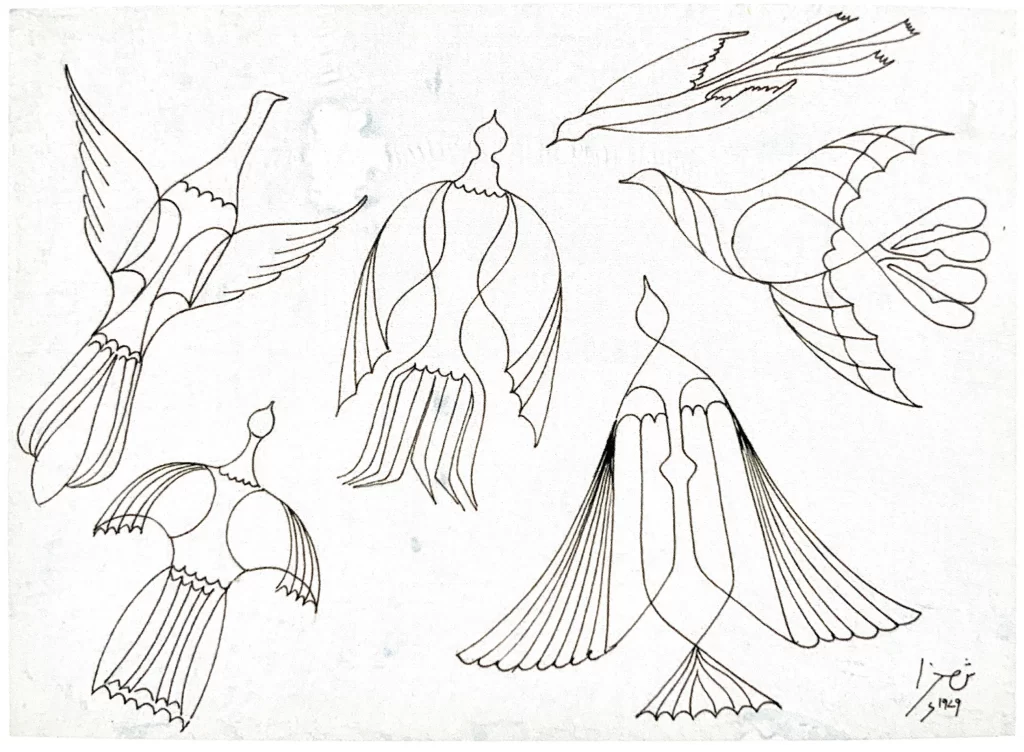
Anwar Jalal Shemza’s Birds in Flight began as a drawing made in 1979. The original has since been lost; what remains is a small photograph of a group of pigeons drawn almost entirely through line.
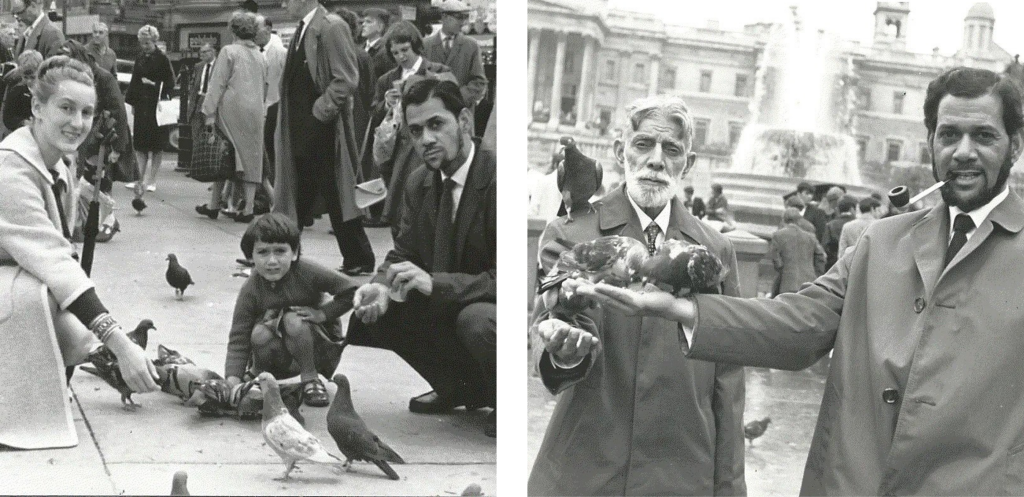
Pigeons had been part of Shemza’s life since childhood. Growing up in Lahore, he kept homing pigeons on the roof of his family home. Pigeon breeding and training, known as kabootarbaazi, has deep roots in Persian and Mughal culture and remained a familiar tradition across the Subcontinent.
Years later, after moving to Britain, pigeons appeared again during family visits to Trafalgar Square.
The project grew out of a series of conversations with Paul Hedge of Hales Gallery in London around artists, weaving, and what happens when an image moves from one medium into another.
Translating the drawing into tapestry presented a particular challenge. A composition made from only a few lines would have to be rebuilt by hand through thousands of intersections of wool. Something light enough to suggest birds moving through air would become an object with weight, texture and labor embedded within it.
Working from the surviving photograph, the drawing was enlarged and reconstructed as a tapestry, including the water stains and imperfections of the original record.
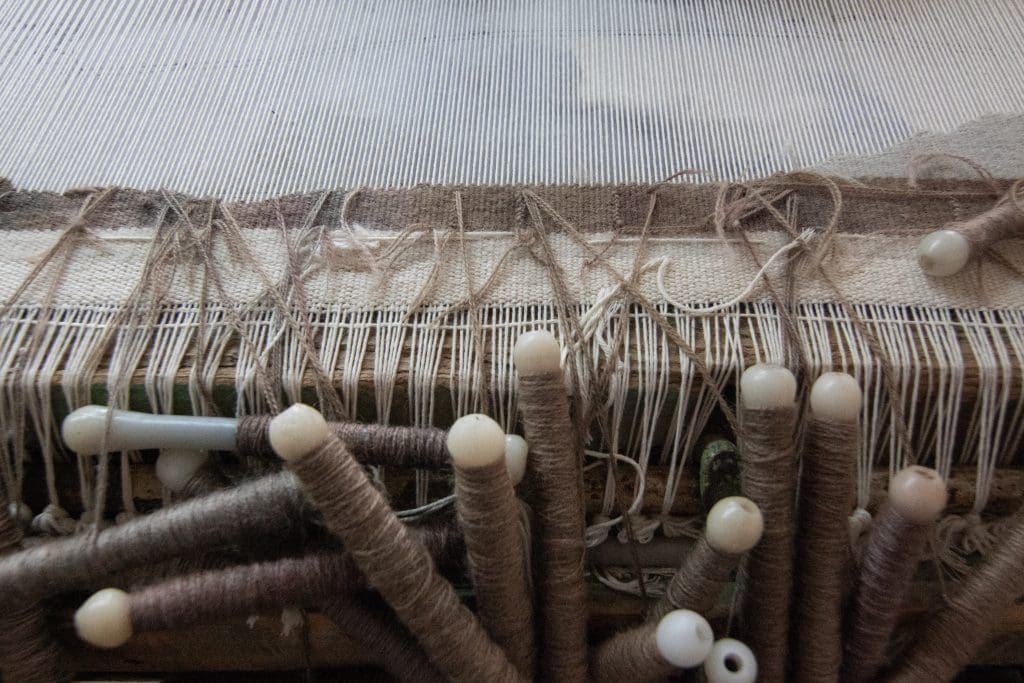
At a much larger scale, the image changed. The lines became more pronounced, the spaces between them more important, and the small photograph took on a new physical presence.
Textile is one of the oldest ways of making images, yet here it became a way of recovering something that had almost disappeared.
The intention was never to reinvent Shemza’s drawing. It was to notice what remained, understand what was worth preserving, and find a way to give the image another life.
In this case, it happened to be a small drawing of pigeons.